
To blend contemporary and heritage exterior styles, start by choosing a harmonious color palette that evokes warmth and personality; think sunny yellows or rich terracottas that welcome you home. Next, integrate complementary materials, like sleek metals paired with classic brick or rustic stone, creating a delightful texture contrast that draws the eye. Finally, balance architectural features by mixing modern lines with traditional arches, allowing both styles to coexist beautifully. This combination tells your home's unique story, offering comfort and charm that enchants anyone who approaches. You'll discover even more ways to enhance this enchanting blend!
Key Takeaways
- Choose a harmonious color palette that combines warm shades and bold contemporary colors to create a welcoming atmosphere while respecting heritage tones.
- Integrate complementary materials, such as sleek metals with classic brick, to create texture contrast and enhance both aesthetic appeal and durability.
- Balance architectural features by mixing modern lines with traditional elements, ensuring symmetry to create visual rhythm and admiration.
- Adapt color choices and materials to seasonal variations, ensuring the design remains appealing and functional throughout the year.
- Tell a unique story through design by thoughtfully combining textures, shapes, and colors to reflect personal taste and historical context.
Choose a Harmonious Color Palette
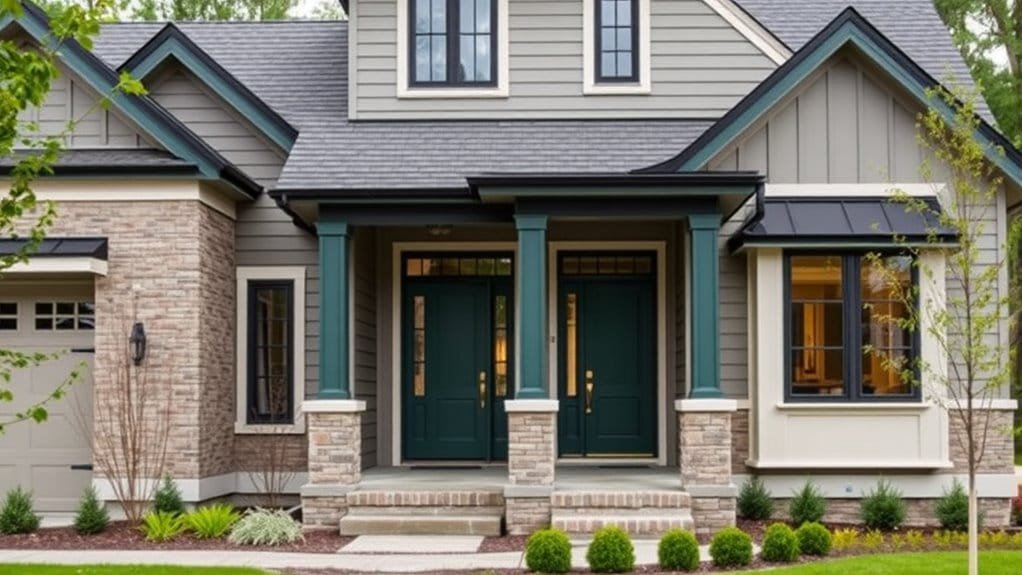
When blending contemporary and heritage exterior styles, selecting a harmonious color palette is essential for achieving a cohesive look. You'll want to think about color psychology, as colors can evoke emotions and set the mood for your home. For instance, warm shades like soft yellows or earthy terracottas can create a welcoming atmosphere, while cooler tones, such as blues or greens, instill a sense of calm and tranquility.
Also, consider seasonal variations; colors that shine in summer may not have the same appeal in winter. When you choose a palette, think about how your colors will look throughout the year. Maybe a rich burgundy can feel cozy in fall but feels too heavy in spring.
As you explore options, don't shy away from experimenting with various combinations. You could pair a contemporary charcoal gray with heritage cream, striking a balance that honors both styles beautifully. Remember, the goal is to create a seamless connection between the old and the new, making your home a true reflection of your unique taste. So grab some swatches, envision your space, and let the colors tell your home's story!
Integrate Complementary Materials
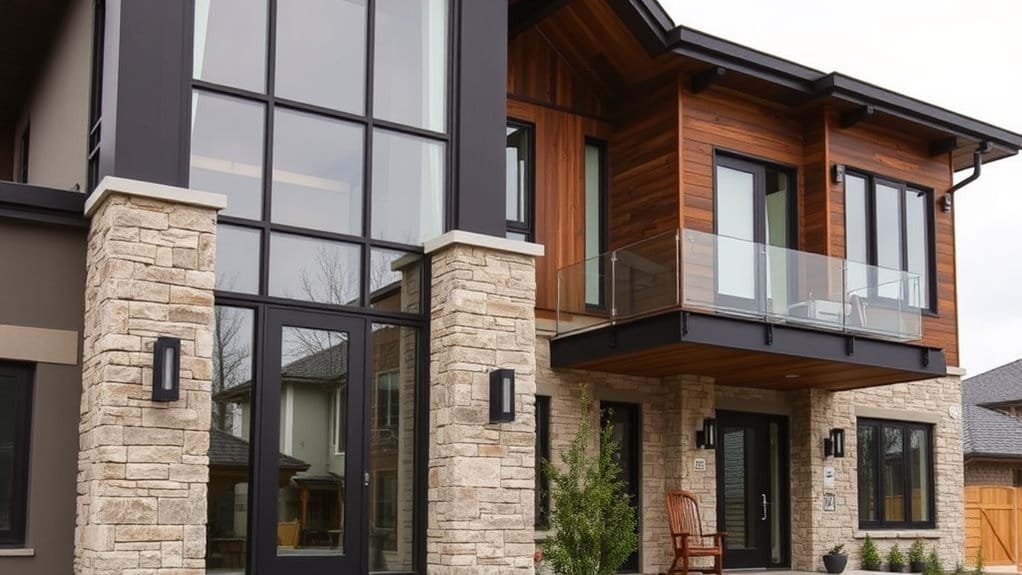
Integrating complementary materials is essential for harmonizing contemporary and heritage exterior styles. By thoughtfully combining different materials, you can create a dynamic visual experience that captivates the eye while guaranteeing durability. Consider pairing sleek metal accents with classic brick or stone, offering a delightful texture contrast that breathes life into your home's facade. Imagine running your hand over the smooth surface of modern materials, only to be met by the warmth of traditional textures—this interplay can really evoke emotion and connection.
Don't forget about material durability; choosing options that stand the test of time guarantees your home remains beautiful for years to come. For instance, using weather-resistant wood alongside contemporary glass not only looks stunning but also provides practical benefits that protect your investment.
As you explore these combinations, think about how each material interacts with light and shadow, creating a living canvas that shifts throughout the day. Embrace the unique characteristics of each element, allowing them to complement one another in a dance of styles that feels both fresh and rooted in history. In doing so, you'll craft an exterior that tells a story—a narrative of time, place, and personal style.
Balance Architectural Features
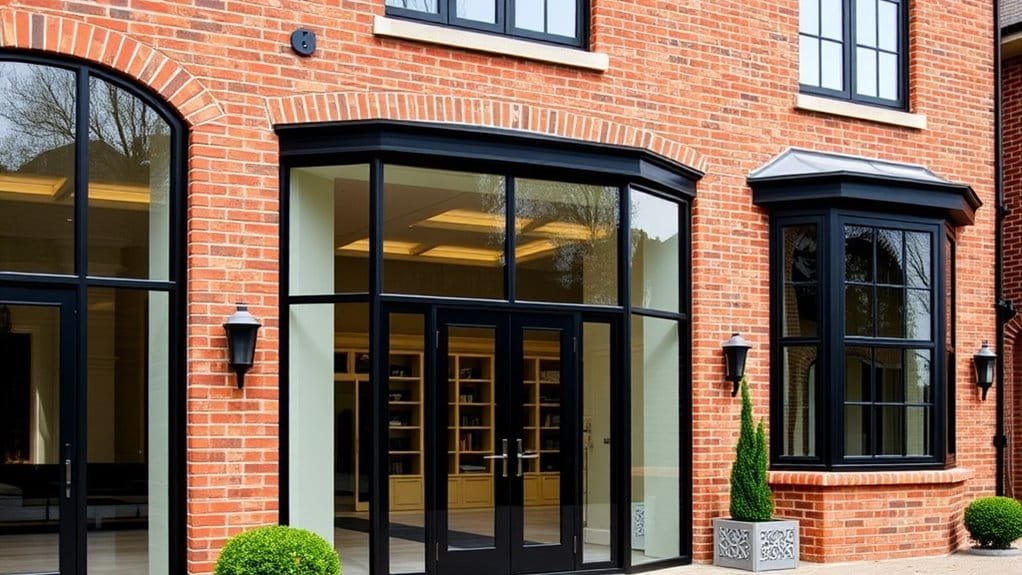
Achieving balance in architectural features is crucial for blending contemporary and heritage styles seamlessly. To create a striking façade that speaks to both eras, you'll want to embrace contrast elements like modern lines paired with classic arches. Imagine how a sleek, minimalist doorway can complement ornate crown molding; it's all about finding that sweet spot where both styles coexist harmoniously.
Architectural symmetry plays a significant role too. By arranging elements in a way that feels balanced, you create a visual rhythm that draws the eye and invites admiration. For instance, if you opt for a bold, contemporary color on your front door, consider framing it with traditional sidelights to maintain that classic touch. This thoughtful approach guarantees that neither style overpowers the other, allowing each to shine.
As you design, think about how these features interact, weaving a tale of past and present. You're not just constructing a building; you're crafting a narrative that honors history while embracing modernity. So, go ahead, experiment with textures, shapes, and colors, and watch as your space transforms into a stunning demonstration of both architectural worlds. Your home will truly reflect your unique vision and personality!
Conclusion
Blending contemporary and heritage styles isn't just about aesthetics; it's a dance of tradition and innovation, where each element plays its part in creating a beautiful harmony. So, as you choose your colors, materials, and architectural features, remember that every choice tells a story, breathing life into your home. Embrace the journey, let your creativity flow, and watch as your space transforms into a warm, inviting sanctuary that reflects who you truly are. Happy decorating!